

Creative Block Isn’t the Problem — It’s the Signal
(Self)
Creative block is rarely about not having ideas.
It’s about the nervous system saying: something isn’t sustainable anymore.
When writers and producers hit a creative wall, the first assumption is almost always personal failure. The internal story sounds familiar:
- “I’m uninspired.”
- “I’ve lost my flow.”
- “I should be further along by now.”
But creative block isn’t evidence that you’ve run out of ideas or potential. More often, it’s feedback — a signal that the internal system supporting your creativity is under strain.
In a creative culture that celebrates output but ignores maintenance, block becomes the language your system uses when it needs attention.
The Self Layer of Creativity Explained
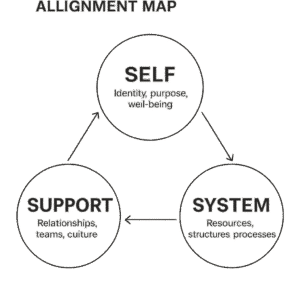
Within the Finding the Music Inside® Framework™, the Self is the foundation of all creative work.
The Self includes:
- Your mindset
- Your emotional state
- Your sense of identity as a creator
When these are stable, creativity flows more easily. When they become overloaded, creativity becomes fragile.
One of the most common reasons creative block appears is when self-worth becomes over-attached to output. Songs stop being expressions and start feeling like proof. Sessions stop being experiments and start feeling like verdicts.
High-stakes creativity doesn’t inspire risk — it shuts it down.
Creative block often appears when:
- Your identity is fused to performance rather than process
- You’re afraid of repeating yourself or being “found out”
- You worry your best work is already behind you
- You no longer feel safe creating without judgement — even your own
In these moments, creativity doesn’t disappear.
It goes quiet — waiting for safety to return.
Why Forcing Inspiration Doesn’t Work
Most advice around creative block focuses on doing more:
write every day, push through, stay disciplined, don’t stop.
But pushing harder at the Self level often increases the pressure that caused the block in the first place. Motivation can’t override a nervous system in self-protection.
That’s why forcing inspiration rarely works long-term.
The system isn’t broken.
It’s overloaded.
Reframing Creative Block
Instead of asking:
“How do I force inspiration back?”
Try asking:
“What pressure am I under that my system can’t hold anymore?”
This small shift changes everything.
Suddenly, creative block becomes something to listen to rather than fight. It points toward the part of your internal infrastructure that needs care — whether that’s rest, reassurance, clearer boundaries, or a redefinition of what success means right now.
When the Self is stabilised — when creativity feels expressive instead of evaluative — ideas return naturally. Not because you forced them, but because the conditions became safe again.
Creative block isn’t the absence of creativity.
It’s information.
And learning how to read that information is the first step toward sustainable creative flow.